

SUGGESTED RESULTS
THERE ARE NO SUGGESTED RESULTS

- Juan Miguel Zunzunegui’s essay vindicates the figure of the Franciscan missionary who preserved the memory, language and worldview of the Nahua peoples after the conquest of Mexico, eventually even being persecuted by the Inquisition.
- Bernardino de Sahagún bridged two worlds, travelled thousands of kilometres founding monasteries, and inaugurated the Colegio de la Santa Cruz de Santiago Tlatelolco, the first mestizo college in the Americas, founded in 1536 to educate indigenous elites. Through his work, he became a pioneer of ethnology and anthropology.
- As additional material accompanying the volume, readers can access an in-depth interview with Juan Miguel Zunzunegui via QR code or on Fundación Banco Santander’s YouTube channel.
Madrid, 26 May 2026 – PRESS RELEASE
Fundación Banco Santander presents Bernardino de Sahagún, Guardian of Nahuatl Memory, a new title in the Fundamental History Biographies Collection dedicated to one of the most extraordinary figures of the sixteenth century and one of the great chroniclers of the American continent, whose work General History of the Things of New Spain has survived to this day despite attempts to suppress it during his own lifetime.
Written by historian and author Juan Miguel Zunzunegui, the volume revisits the journey to the roots of Mexico embodied in the legacy of this missionary who united the cultures of two opposing worlds. Bernardino de Sahagún (c.1499–1590) was a Franciscan friar who devoted much of his life to understanding, documenting and preserving the languages, traditions and systems of thought of the Nahuatl world, from his arrival in New Spain in 1529 until his death there in 1590. Thanks to his monumental work — considered a precursor to modern ethnography and anthropology — much of the cultural memory of the indigenous peoples of Mesoamerica survives today, as he created a written alphabet that allowed the oral traditions of the indigenous world to be recorded in writing.
Far from offering merely a historical biography, the book reflects on memory, cultural mestizaje and the encounter between two civilizations that forged an unprecedented cultural exchange. “Understanding Sahagún helps us understand that there was no conquest of Mexico as such, nor any religious or cultural imposition, but rather a process of migration, mixture, fusion and mestizaje,” explains Zunzunegui. Through a journey that traverses ceremonial cities, sacred volcanoes and his codices — the Matritense and the Florentine — repositories of myths and ancestral narratives, Zunzunegui portrays Sahagún as “a bridge between two worlds” and the great guardian of “flowers and songs” within the Nahuatl universe, an expression used by Nahua philosophers, the tlamatimine, to designate poetry as a form of existence.
“Bernardino de Sahagún understood that when a civilization loses its memory, it also loses its soul,” says Juan Miguel Zunzunegui. “His work was an extraordinary attempt to listen to, understand and preserve the voice of the other.”
Bernardino, who was born along the Camino de Santiago in Sahagún, grew up surrounded by the diverse beliefs and stories brought by pilgrims and became one of the disciples of the sixteenth-century School of Salamanca, the intellectual seedbed of what was then Europe’s most important university. According to Francisco Javier Expósito, Head of History at Fundación Banco Santander, “Bernardino understood himself through understanding the Nahuatl worldview; he was ahead of his time in many fields, including anthropology, and a spiritual adventurer who exercised his humanity through superhuman activity until the age of ninety.”
Expósito also notes that Bernardino de Ribeira never returned to Spain and encountered serious difficulties with the Inquisition in publishing his work, as he was accused of excessive sympathy towards indigenous peoples. It was Juan de Ovando, President of the Council of the Indies, who ultimately supported him so he could complete his research and translate it into Castilian.
The volume places readers within the complex historical context of New Spain and highlights the role played by Sahagún and numerous Franciscan missionaries, such as the so-called Twelve Apostles — among them Martín de Valencia and Fray Toribio de Benavente, author of History of the Indians of New Spain — who contributed to preserving a cultural heritage that came close to disappearing and defended indigenous peoples. The author also emphasises the innovative character of Sahagún’s method, based on interviews, testimony gathering, Nahuatl translation and collaboration with indigenous scholars and informants — an exceptional undertaking for its time.
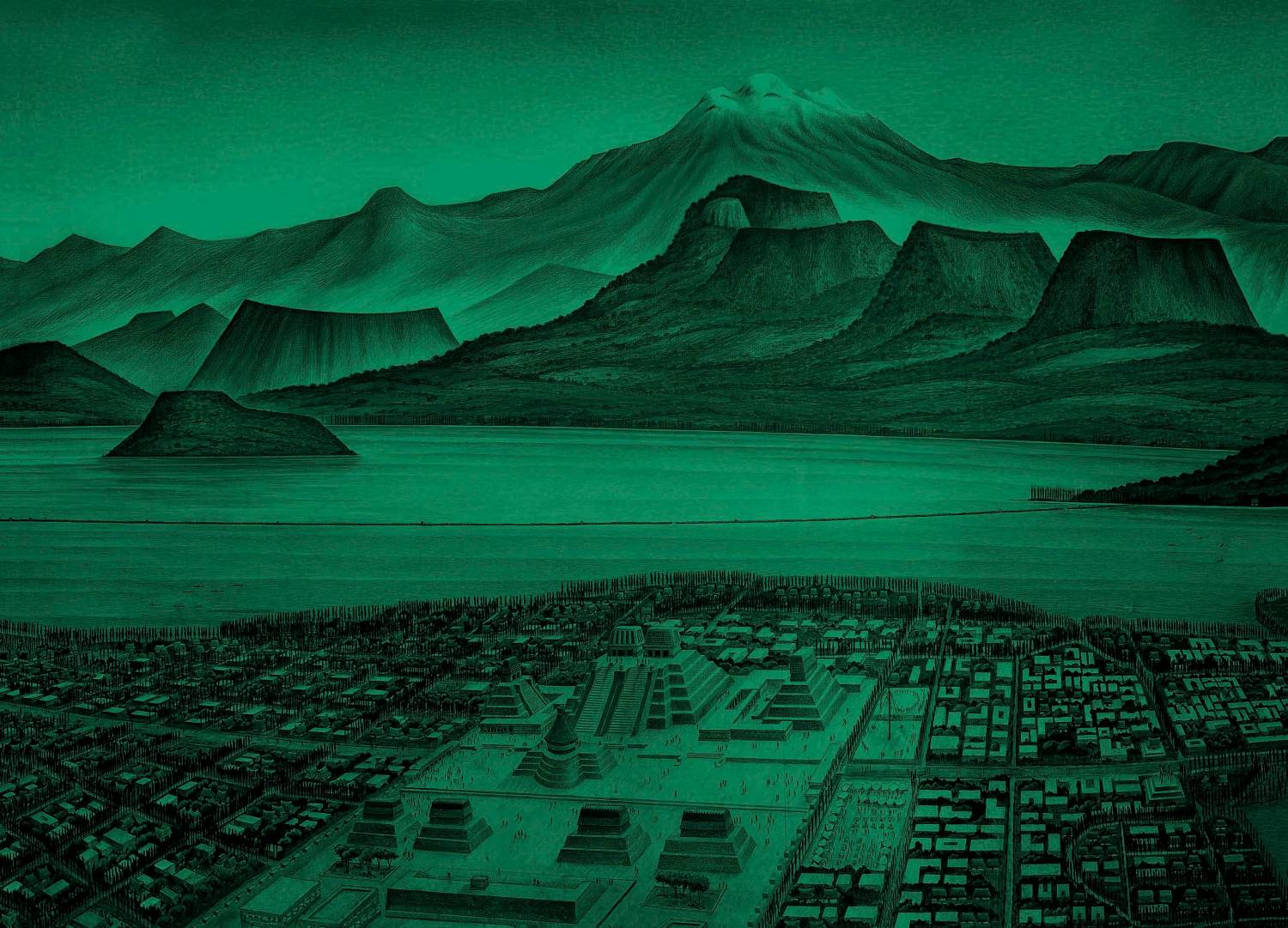
The book also explores some of the great symbols of the Mesoamerican universe — including Quetzalcóatl, Teotihuacán, Tenochtitlán and the volcanoes Popocatépetl and Iztaccíhuatl — and reflects on the construction of Mexican cultural identity through the encounter between indigenous traditions and Hispanic heritage. The essay delves into the myths of the Nahua peoples and especially The Death of the Fifth Sun, an event awaited by the Mexica that took shape with the fall of Tenochtitlán on 13 August 1521 before Cortés’ Spaniards and an army of more than 100,000 Tlaxcalans.
With this new publication, Fundación Banco Santander reaffirms its commitment to historical dissemination and the preservation of cultural heritage, promoting editorial projects that bring the public closer to essential figures for understanding the shared history of Spain and the Americas.
About the author
Juan Miguel Zunzunegui holds a degree in Communication and a PhD in Humanities. A specialist in philosophy, history, geopolitics and religions, he is widely involved in public outreach and is the author of numerous essays and historical novels.