
SUGGESTED RESULTS
THERE ARE NO SUGGESTED RESULTS


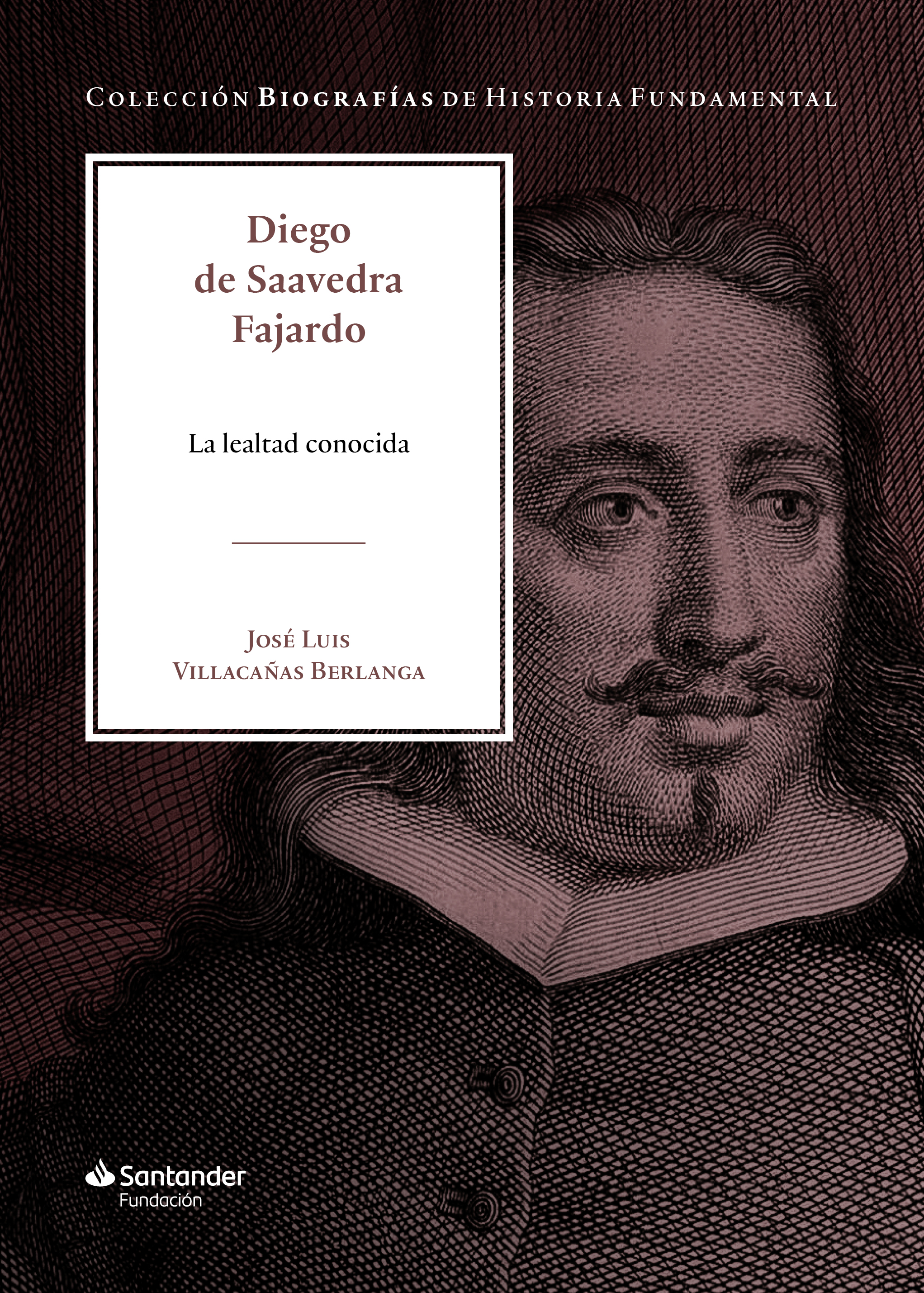
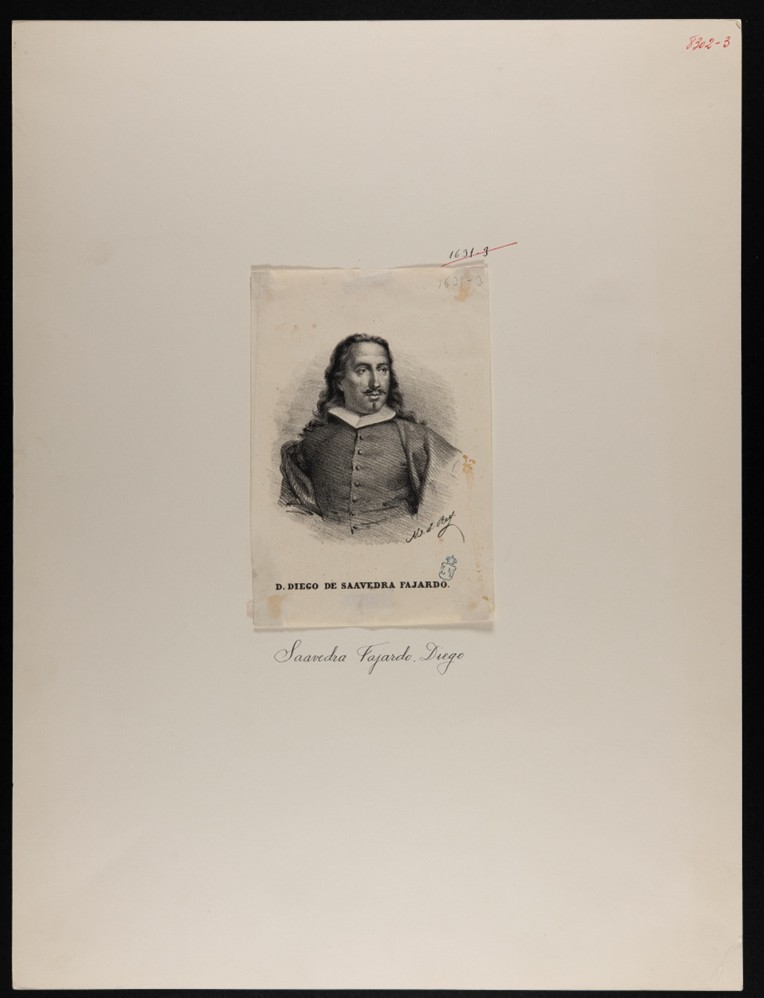
- Fundación Banco Santander presents Diego de Saavedra Fajardo. La lealtad conocida a new volume in the Biografías de Historia Fundamental collection, written by José Luis Villacañas, Professor of Philosophy at the Complutense University of Madrid and a specialist in the relationship between Spanish and European thought.
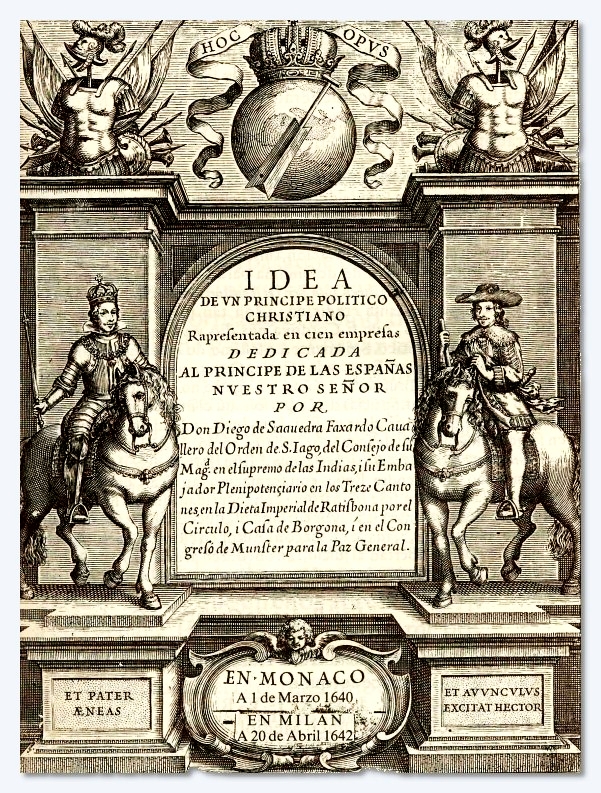
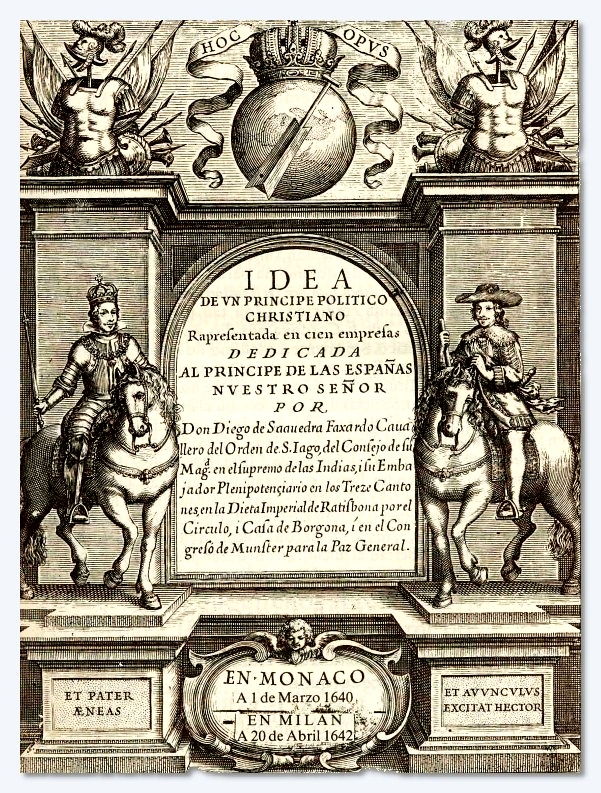
- This is the first essayistic biography of Saavedra Fajardo, writer, diplomat, and one of the most critical and brilliant political minds of the Spanish Golden Age, author of ethical and political manuals such as Empresas políticas, which continue to astonish with their relevance today.
- Saavedra Fajardo had an exciting life characterised by the wars, alliances and betrayals that surrounded the decline of the House of Austria and the loss of the Spanish Empire's hegemony in Europe, of which he was both a witness and a participant in the Peace of Westphalia.
- The book is accompanied by an exclusive interview with José Luis Villacañas, available free of charge on our website. The volume is also available in EPUB and audiobook formats.
- The volume will be presented on 29 October at 6:30 p.m. at the Círculo de Bellas Artes in Madrid.
Madrid, 29 October 2025- PRESS RELEASE
Fundación Banco Santander publishes the second volume of Biografías de historia fundamental (Biographies of Fundamental History), a collection dedicated to recovering key figures from the 16th to 19th centuries who, for various reasons, have been forgotten or remain largely unknown to the public, despite having played a prominent role in the development of Spanish and Latin American history.
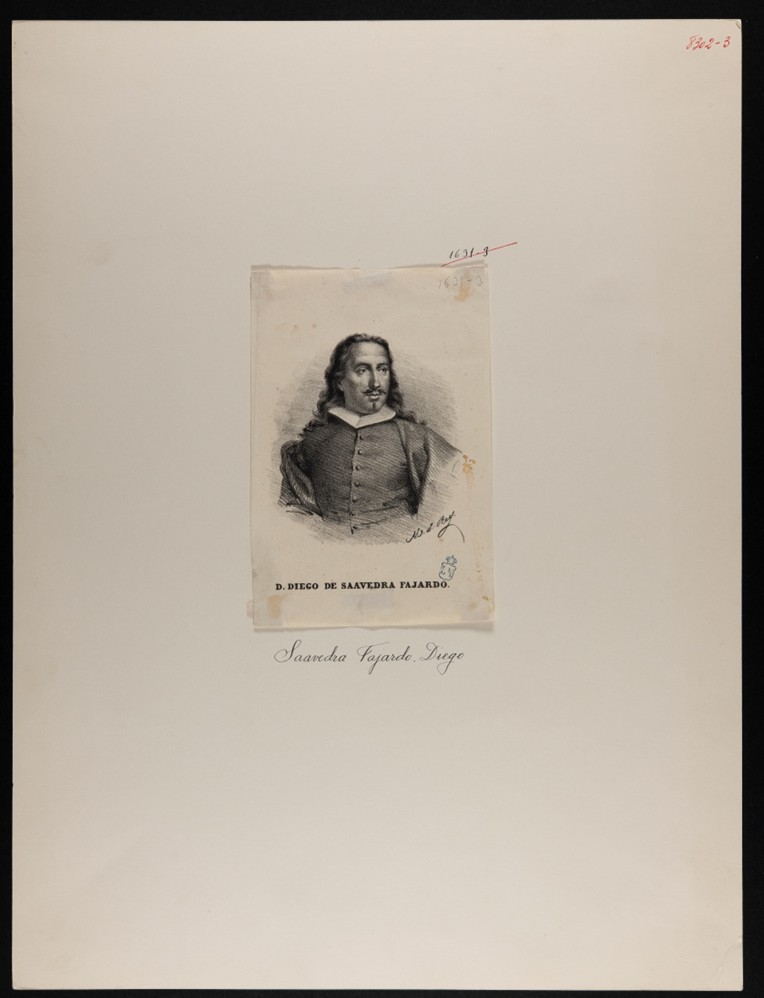
This book recounts the biography of writer and diplomat Diego de Saavedra Fajardo (1584–1648), an exceptional witness to a decisive moment in Spanish history, characterised by military conflicts in Europe and the decline of the House of Austria.
A native of Murcia, he is considered one of the most brilliant advisors of his time thanks to his experience in the European courts where he resided, as well as the strength of his integrity and intellectual independence, which he expressed through his writings. He was the fifth son of a minor noble family related to the Marquises of Vélez, and he studied Law and Canon Law at the University of Salamanca. In 1607 he was granted the habit of the Order of Santiago. He began his diplomatic career in 1612 as secretary to Cardinal Gaspar de Borja, the Spanish ambassador in Rome. After earning the trust of Philip IV, he was entrusted with managing the king’s political and diplomatic relations in Germany, Switzerland, and Italy. His position made him a witness to one of the most complex periods in Spain’s history.
Although some of his biographical details are unknown, perhaps irretrievably lost in the passage of time, and his complete works, hastily written on roads and in guesthouses, are not available, there is sufficient information to recognise his multifaceted talent, sharp wit and profound intelligence. Above all, his loyalty to the nation and its king in the most adverse circumstances stands out, guided by the most critical scepticism and the aim of preventing the fall of the Spanish Empire in Europe.
José Luis Villacañas, a philosophy professor at the Complutense University of Madrid who specializes in the relationship between Spanish and European thought, wrote this volume. "The general public has forgotten Saavedra Fajardo," Villacañas explains, "but every generation of Spaniards has had some academics who recognized him for breaking with the superstitious mentality of Spanish society at the time and for the great relevance of his economic and political texts."
For Villacañas, Saavedra Fajardo is the most balanced literary figure of the Spanish Baroque period, because he represents the European spirit embodied in the Golden Age. The experience he gained from his travels in Rome, Germany and Switzerland is reflected in his works. "He is the author who was most translated into other languages throughout the 17th and 18th centuries. Saavedra is continuously translated as a man of political science, of great ideas regarding the monarchy," Villacañas points out.
In the opinion of Javier Expósito, head of the Colección Historia Fundamental, "in these times we need figures with the independence and ethical stature of Saavedra Fajardo in politics, in culture, in all spheres, who set an example with their attitude toward the crises and uncertainties we are experiencing. That’s why we have brought him back, because his critical and sceptical spirit, and his writing, are more necessary than ever."
Despite living through a very turbulent period of transition, with wars, alliances and betrayals, and experiencing many calamities, Saavedra Fajardo is a relatively optimistic and hopeful man in his work. Another aspect that Villacañas highlights is his ability to maintain a balance between being aware of his aristocratic status and clearly avoiding any position of superiority in his texts. He is also a very accomplished writer (as an author of poetry, satire, dialogues, treatises, history, correspondence). "On occasions, he expresses his outbursts of anger, because he feels that no one is following his advice on what he thinks should be done, but he is always willing to serve. He is not an elitist aristocrat. This can be clearly seen in the way he relates not to the high aristocracy, but to office or section heads," explains Villacañas, "he tells his superiors what he thinks with astonishing sincerity. He is clear in his opinions with figures such as the Count-Duke of Olivares, Francisco de Melo (Governor of the Netherlands), and Cardinal Infante (Fernando de Austria). He is loyal, but at the same time critical, which allows him to maintain his independence."
"He developed political strategies which, in hindsight, could have spared Spain many of the problems it faced during the Thirty Years' War," says Villacañas. "On the one hand, he clearly identified the need to establish a doctrine of international relations that would make trade routes neutral, an idea that was remarkably progressive for its time. On the other, he emphasized the importance for Spain of organising its position in central Germany, creating a network of states that were not enemies and that were strong enough to stop France’s expansion. These were his great contributions to Spanish politics. Unfortunately, neither was ever put into practice."
The volume will be presented on 29 October at 6:30 p.m. at the Círculo de Bellas Artes in Madrid. Admission will be free until full capacity is reached.
Statements made by participants at the press conference:
Statement by Benigno Pendás, President of the Academy of Moral and Political Sciences: "Saavedra, perhaps because he does not have as much power and is far removed from the conspiracies of the Court, gets things right and is a wise man, a politician, not at all dogmatic, and that makes him tremendously relevant and necessary at this time."
Statement by José Antonio Marina, philosopher, essayist and educator: “Saavedra is one of the most politically astute figures in our history, a better writer than Gracián, and we must concern ourselves in this era, as he did in his own time, with the political preparation of those who come to power. José Antonio Marina emphasised that "we must restore the teaching of history as an essential element in understanding our own present." Marina is captivated by Saavedra's writings, which are incredibly relevant today, such as "power disturbs the passions, which is why we must keep an eye on those who come to power".
José Luis Villacañas, author: Saavedra is a seeker of truth, the first Spaniard to distinguish between the House and the State in politics, "until his last breath, Saavedra offered constructive proposals to establish an inclusive monarchy."