
SUGGESTED RESULTS
THERE ARE NO SUGGESTED RESULTS
Manufactura de Alcora
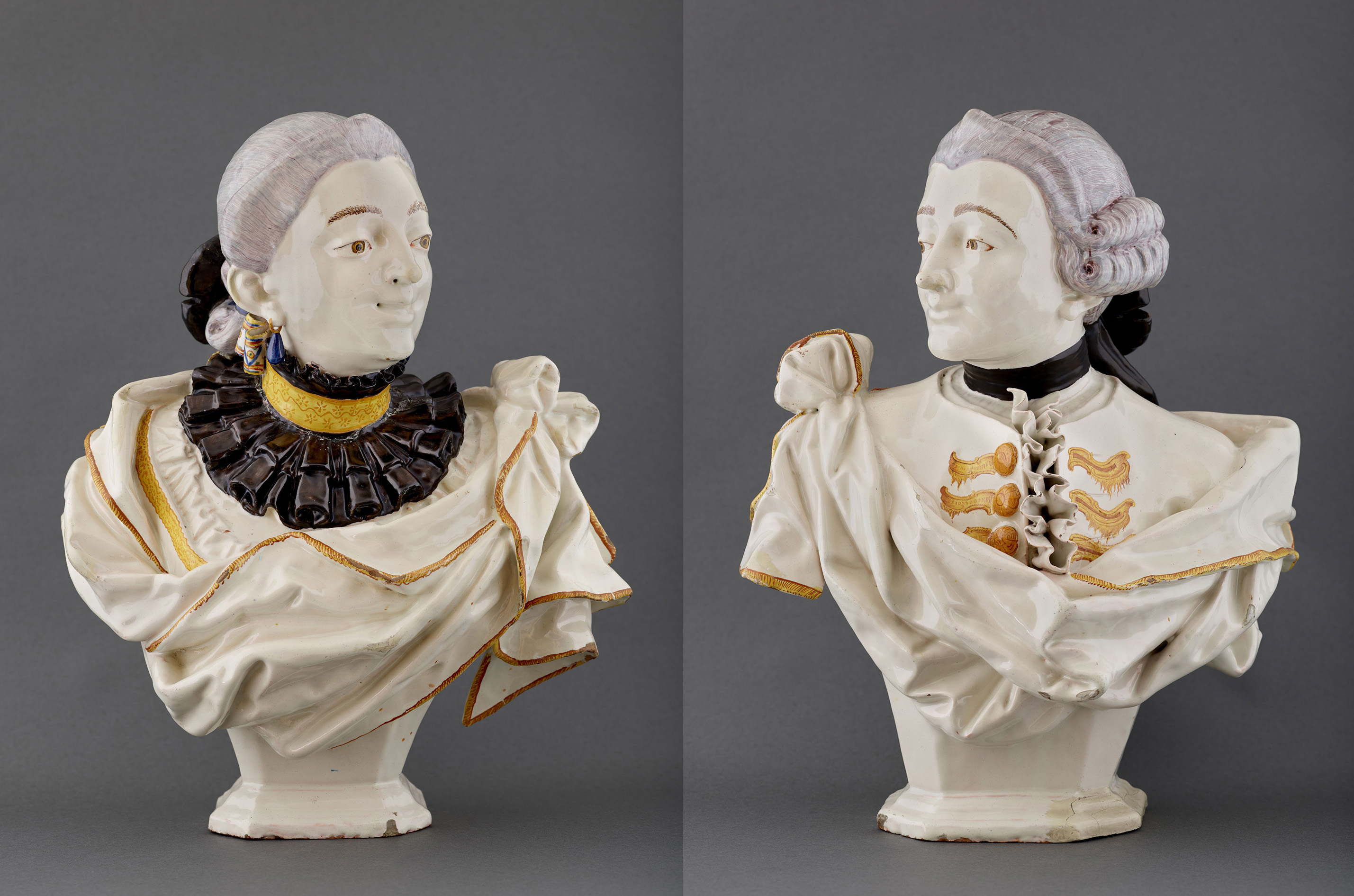
Bust of a lady - Bust of a gentleman
1761-1763
WORK INFORMATION
Ceramic, polychrome earthenware, height: 45 cm
The Alcora manufactory was founded in 1727 by the 9th Count of Aranda on land he owned in what is now the province of Castellón. The aim was to create a luxury earthenware and porcelain factory that would compete with foreign manufactories. Royal privileges, including tax exemption on the export of pieces and the free entry of materials from abroad, allowed this manufactory to operate until the middle of the 19th century despite the fact that it barely made any profits.
Throughout its existence, the factory became a model of organisation and a point of reference in terms of aesthetics thanks to the recruitment of foreign specialists, artists and “secretists” who claimed to know the secret of porcelain manufacture. In addition, the creation of an apprentice academy enabled the manufactory to continue to provide top quality production.
In addition to crockery, Alcora made all kinds of objects, such as frames, wall sconces and writing instruments, among other items. From 1742 onwards, the actual sculpture workshop was set up, where plaster moulds were made and modified to compensate for the defects caused by overuse. The factory’s payroll lists the sculptor Julián López (who had been hired in 1742) as “drawing and carving master and teacher of apprentices”, and the only employee engaged in sculpture. The production of sculpted figures, whose success did not become apparent for another ten years, continued until the beginning of the 19th century. Although it was the German factory in Meissen that led the manufacture of ceramic sculpture in Europe, the Alcora repertoire was different and original.
Many of the models made between 1761 and 1763 had been in production since 1752, but others were added, such as this pair of elegant busts recorded in the inventory as “military man and lady”. The female bust depicts a lady with a wig and earrings, in a golilla collar and a draped cloak. The male figure, also in a wig, wears a draped cloak over a jacket with a set of buttons. Both pieces rest on an octagonal, chamfered plinth.