

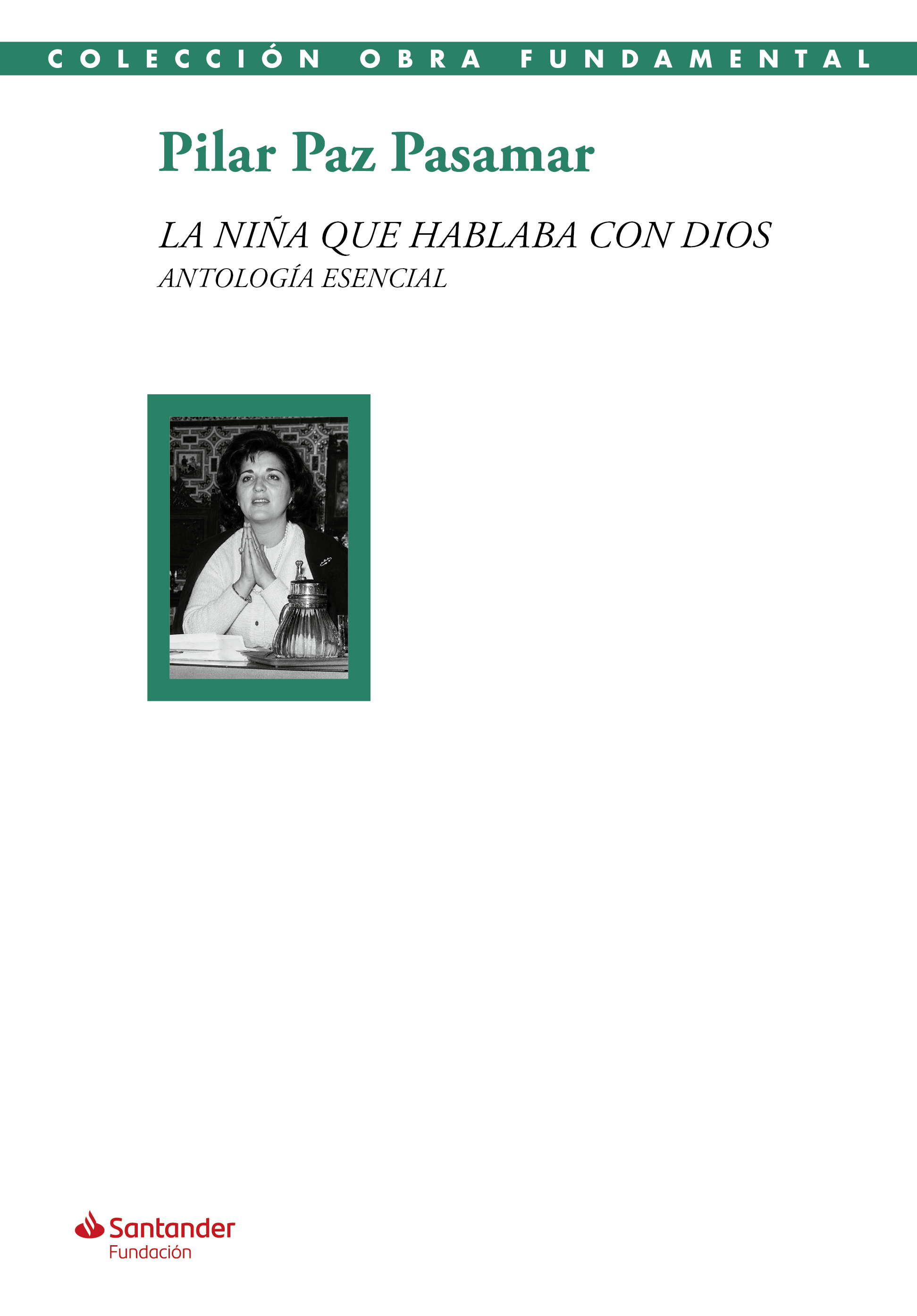
Pilar Paz Pasamar (Jerez de la Frontera, 1932–Cádiz, 2019) was one of the first women poets of the so-called “Children of the War” generation. In 1951, she astonished the bleak literary landscape of post-war Spain with her first collection of poems, Mara. The author revealed herself as the heir to, and witness of, the mistreatment endured by other women poets such as Gloria Fuertes and Josefina de la Torre, the latter of whom was her friend and mentor. The poems in this book, written by a poet who was scarcely more than a girl and who spoke with God, deeply moved masters such as Vicente Aleixandre. Of all the eyes fixed on this prodigious young poet, the most perceptive were those of Nobel laureate Juan Ramón Jiménez, who praised Mara and with whom the author maintained an important correspondence. She came to be regarded as the last disciple of the poet from Moguer and as one of the great Spanish mystical poets of the twentieth century. Her work moves through unusual realms such as Sufism, Christian theology, Andalusian culture, and Kabbalah.
The queen of Madrid’s cultural scene in the 1950s, she soon became disillusioned with the turbulent literary world and its intrigues, and withdrew to her native Cádiz. Her lack of desire to participate in intellectual circles deprived her of recognition among the wider public. This volume brings together the essential body of her work in verse and prose, which, from the pulse of the divine and the human, explores themes that are committed, popular, or biographical through poems, short stories, essays, and articles.
Manuel Francisco Reina (Jerez de la Frontera, Cádiz, 1974) is a poet, playwright, novelist, and literary critic. A member of the Spanish Academy of Performing Arts, he contributes to publications such as ABC, La Vanguardia, and Babelia, and currently writes for T Magazine of The New York Times. He is the author of numerous collections of poetry, including Los amores oscuros, as well as essays such as El plagio como una de las bellas artes, and has edited anthologies including Mujeres de carne y verso, La paz y la palabra, and Poesía andalusí. His work has received distinctions including the Jaime Gil de Biedma Prize and the Madrid Regional Theatre Prize.